Bhubaneswar, May 27: The Odisha Cabinet has approved the Odisha Repealing Bill, 2026, marking a significant administrative reform aimed at overhauling the state’s legal framework by removing outdated and redundant laws.
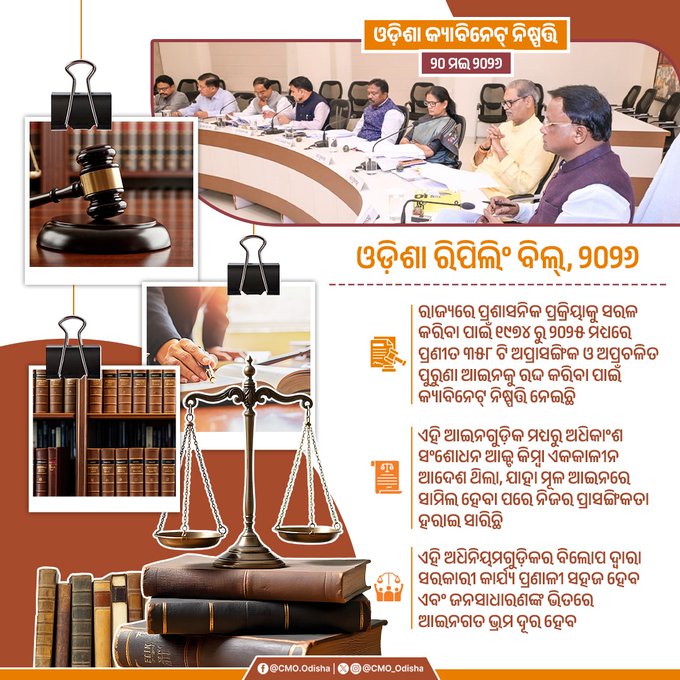
Pic Credit: https://x.com/CMO_Odisha
Under the approved plan, the state will repeal 358 obsolete laws enacted between 1974 and 2025. Officials said many of these provisions have lost relevance over time due to changes in governance structures, policy updates, and evolving administrative requirements.
Cabinet’s Reform Plan
The Cabinet’s decision is part of a broader legal rationalisation exercise designed to simplify governance and improve regulatory efficiency. The plan focuses on identifying laws that are no longer in use, overlap with existing provisions, or create unnecessary procedural complexity.
According to officials, the objective is to streamline the legal system so that departments can function with greater clarity and reduced administrative burden. The reform is also expected to help eliminate conflicting provisions that often lead to delays or confusion in implementation.
Key Objectives of the Exercise
The Cabinet emphasised that the repeal initiative is intended to:
- Modernise the state’s legal and regulatory structure
- Reduce compliance burden on government departments
- Improve clarity and accessibility of laws for citizens
- Enhance efficiency in administrative decision-making
Broader Governance Push
Officials said the move is part of a sustained effort to align Odisha’s legal framework with current governance priorities and development needs. By removing outdated statutes, the government aims to ensure that the legal system remains relevant, transparent, and easier to navigate.
The Cabinet also noted that such periodic reviews of laws are essential for improving ease of governance and supporting faster, more efficient public service delivery across departments.