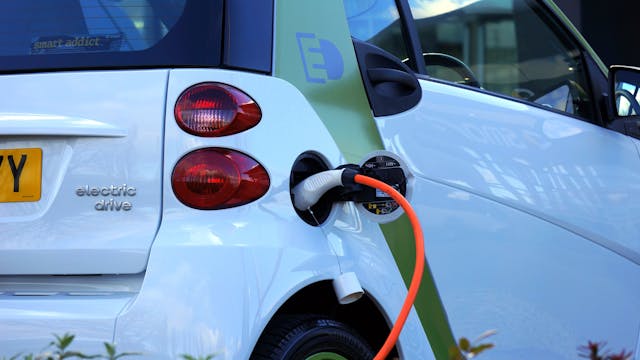
Bhubaneswar, June 1: The Odisha government has directed all departments to transition to electric vehicles (EVs) for official use, introducing category-wise price limits as part of a broader push towards sustainable mobility and reduced fuel expenditure.
The decision, issued through a Finance Department Office Memorandum dated May 30, 2026, comes in response to rising fuel and energy costs and the need to promote cleaner transportation alternatives across government operations.
Under the new guidelines, EV procurement will follow clearly defined cost ceilings based on official ranks. The highest category, including the Governor, Chief Minister, Chief Justice and Judges of the Orissa High Court, and Ministers, will be eligible for vehicles up to ₹30 lakh. Senior administrative officers such as the Chief Secretary, Development Commissioner, Agriculture Production Commissioner, and Secretaries will have a ceiling of ₹25 lakh, while district-level officers including Collectors and Superintendents of Police will be permitted vehicles up to ₹20 lakh.
The memorandum states that all vehicle purchases must adhere to prescribed procurement procedures and require prior approval from the Finance Department. It also mandates that new vehicles will only be acquired after completing the stipulated lifecycle of existing vehicles, followed by proper scrapping or condemnation.
Departments have been encouraged to use the Government e-Marketplace (GeM) platform for procurement wherever feasible to ensure transparency and efficiency. The guidelines also specify that EV purchases will be limited to models manufactured by select approved companies, and restrictions have been placed on multiple vehicle allocations for senior officers.
In addition, the procurement of petrol and diesel vehicles will now be restricted and permitted only in exceptional cases with explicit approval from the Finance Department.
The policy applies to all state government departments as well as government undertakings, universities, and other state-aided institutions, marking a significant shift towards clean energy adoption in official transportation.
Officials said the move is aimed at promoting environmental sustainability while ensuring fiscal prudence in government expenditure.