Dance is an important expression of culture, and Odisha’s folk dances reflect the traditions, emotions, and lifestyle of its people. Unlike classical dances, which follow fixed rules, ancient texts, and formal techniques, folk dances develop naturally from community life, festivals, and local customs. Odisha’s folk dances are simple, energetic, and closely connected with nature, social celebrations, and traditional beliefs. They serve as a bridge between generations by preserving the cultural identity of the state.
History and Origin of Folk Dances of Odisha
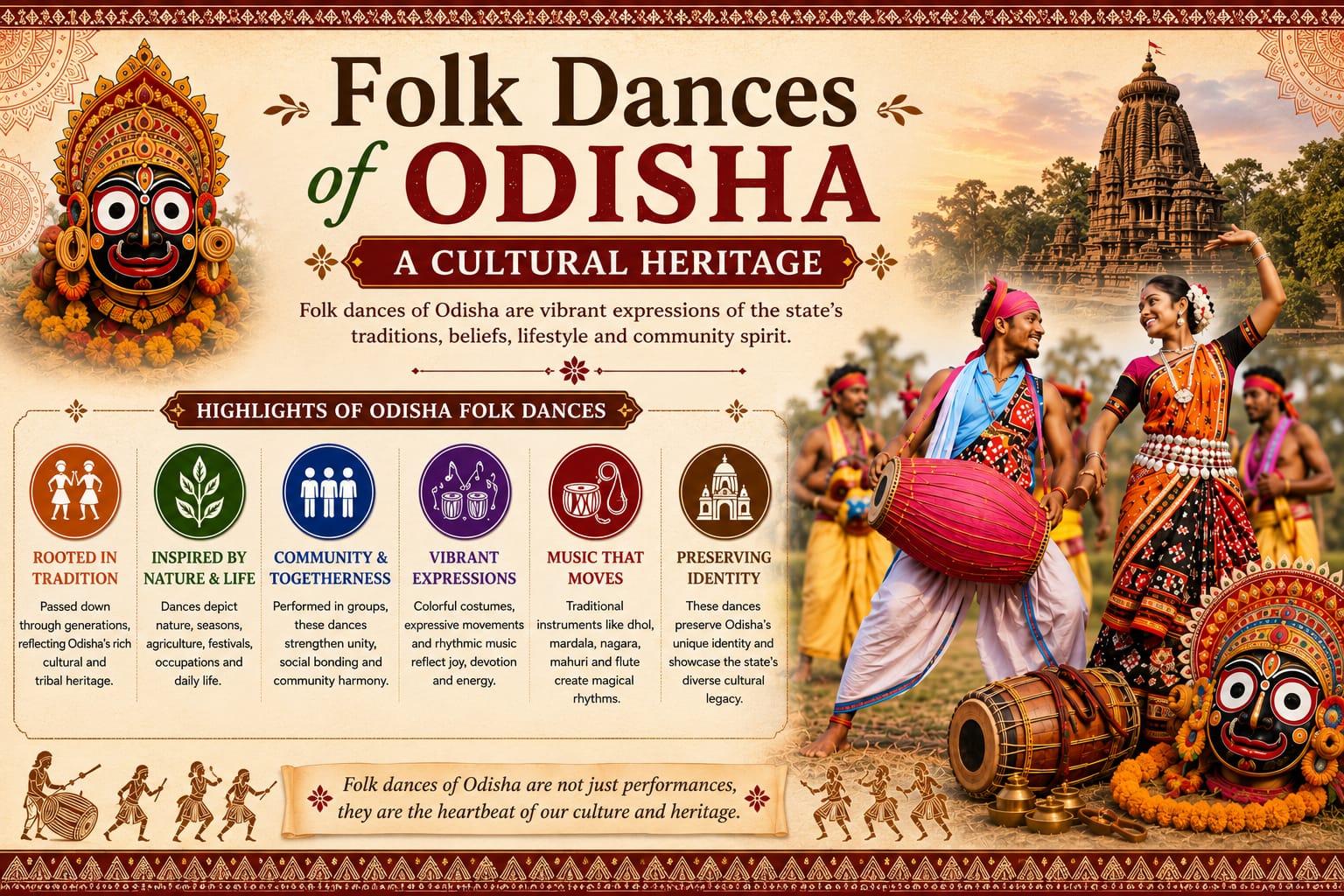
The folk dances of Odisha have their roots in ancient village traditions and tribal communities. They began as expressions of gratitude towards nature, celebrations of harvest, religious practices, and stories of everyday life. Passed down through generations, these dances have continued to preserve the cultural memories of Odisha.
Major Folk Dances of Odisha
Odisha has a rich variety of folk dance forms, each representing different regions, communities, and traditions.
Some examples are :
1. Gotipua Dance
- A traditional dance form of Odisha performed by young boys dressed as girls.
- Dancers perform acrobatic movements and intricate footwork.
- It is known for its graceful expressions and artistic presentation.
2. Sambalpuri Dance
- A popular folk dance from the Sambalpur region of Odisha.
- It portrays stories from rural life, culture, and mythology.
- Dancers wear colourful traditional costumes and perform to rhythmic folk music.
3. Danda Nacha
- A unique traditional dance form associated with the Kondh tribe of Odisha.
- Dancers use sticks (danda) while performing coordinated movements and footwork.
- It is often performed during religious festivals.
4. Chhau Dance
- A traditional martial dance form that originated in Mayurbhanj, Odisha.
- It includes masks, elaborate costumes, and acrobatic techniques.
- The dance combines martial arts, storytelling, and music.
5. Ghumura Dance
- A popular folk dance of Kalahandi, Odisha.
- Dancers play a large drum called Ghumura while performing synchronized movements.
- It is known for its energetic style and powerful rhythms.
6. Jodisankha Dance
- A traditional dance form from the coastal regions of Odisha.
- Performers use two conch shells (sankha) as musical instruments.
- It is associated with religious and cultural traditions.
7. Karma Nacha
- A vibrant folk dance connected with the Karma festival.
- Dancers perform energetic movements to seek blessings for good harvest and well-being.
- It is mainly performed by tribal communities.
8. Ranapa Dance
- Usually performed by men using traditional instruments like dhol and flute.
- It reflects tribal culture and community traditions.
Features of Odisha Folk Dances
Colourful Costumes and Ornaments
Dancers wear traditional regional dresses and ornaments with their rhythmic movements that reflect the local culture and identity.
The folk dances of Odisha are known for their energetic, graceful, and well-coordinated movements.
Traditional Music
Performances are accompanied by folk music that adds beauty and rhythm to the dance.
Use of Musical Instruments
Instruments like drums, flutes, cymbals, and other traditional instruments create lively beats.
Cultural Representation
These dances showcase the traditions, beliefs, festivals, and lifestyle of different communities of Odisha.
Storytelling Through Dance
Many folk dances express stories from mythology, rural life, and tribal traditions.
Challenges in Preserving Folk Dances
Changing Lifestyles
Modern lifestyles and changing interests have reduced people’s involvement in traditional folk dances.
Declining Participation
Fewer young people are learning and practicing these dance forms, affecting their continuity.
Lack of Awareness
Limited knowledge about the cultural importance of folk dances can lead to their gradual decline.
Financial Difficulties
Many folk artists face economic challenges due to limited opportunities and recognition.
Loss of Traditional Knowledge
With fewer practitioners, the skills and techniques passed down through generations are at risk of disappearing.
Solutions for Preserving and Protecting Folk Dances
Promoting Cultural Programs
Organising festivals, workshops, and performances can increase awareness and encourage participation.
Supporting Folk Artists
Providing financial assistance, recognition, and platforms to artists who dedicate their lives to preserving traditional dance forms.
Encouraging Young Learners
Introducing folk dance education in schools and communities can help the next generation continue these traditions.
Documentation and Research
Recording performances and preserving traditional knowledge can protect folk dances for the future.
Government and Community Support
Government initiatives and community efforts can help safeguard Odisha’s rich folk dance heritage.
Conclusion
The folk dances of Odisha are valuable expressions of the state’s rich cultural heritage and artistic traditions. They reflect the history, beliefs, lifestyle, and creativity of different communities. These dances preserve the stories, customs, and identity that have been passed down through generations. Protecting and promoting Odisha’s folk dances is essential to preserving the cultural spirit of the state and ensuring that these beautiful traditions continue for future generations.